
Interview to The FineEngineering Magazine
On 22 April 2026, The FineEngineering Magazine published an interview with MRTech CEO. The interview is available via the link on Fineeng.eu.
The full, unedited version of the interview can be found here.
A brief description of the company and its activities.
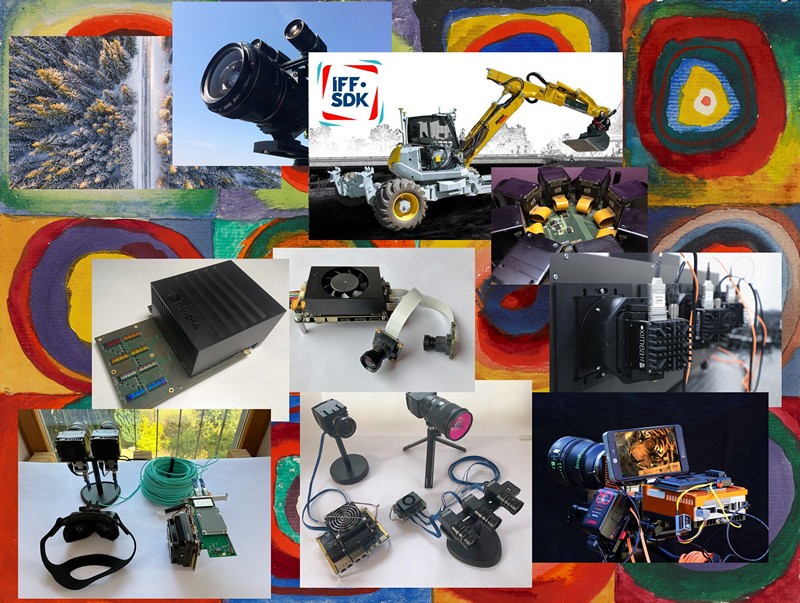
MRTech SK, s.r.o. is a small company based in Slovakia, which operates in the machine vision field with a focus on the high-performance image processing. Its history spans over more than 10 years with successful projects delivered to customers across the globe from various application areas, including entertainment, teleoperation, aerospace, medicine, scientific research.
The FineEngineering Magazine (FINEENG.EU): What are the main areas of activity of the company?
MRTech SK CEO, Igor Kuzmin (IK): MRTech SK focuses on two directions:
- implementation of custom machine vision projects for our customers;
- selling ready-to-use software products, such as the MRTech IFF SDK library and a GUI application for image recording (both color and raw, with post-processing done later).
Mainly our solutions make use of NVIDIA GPUs, either dedicated on the Intel/AMD platform or embedded in the form of Jetson modules. We run our highly optimised image processing code on a GPU, enabling us to deliver images to the end application (local or remote) in the most efficient way. Image quality is also a major concern for many of our customers, particularly in the entertainment field, e.g. cinematography and broadcasting. The flexibility of our software allows to choose the compromise between quality and speed in order to fit into the specific project requirements.
FINEENG.EU: What’s the news about new products/services?
IK: We are in the process of introducing several new products and services:
- Video4Linux camera drivers for Sony IMX477 and IMX586 sensors connected to an NVIDIA Jetson system.
- Service of developing a Jetson camera driver for any other image sensor (or expanding an existing driver with support of new sensor modes).
- Service of creating a new board support package for a customer’s Jetson carrier board or porting existing software to a new Jetson Linux release from NVIDIA.
- Ready-to-use developer kits consisting of various NVIDIA Jetson systems with attached cameras and our software package.
We are also constantly improving our core software library, IFF SDK, by expanding its hardware compatibility and functionality.
FINEENG.EU: What are the ranges of products/services?
IK: Our main product is MRTech IFF SDK, which takes care of the following tasks:
- image acquisition from machine vision cameras (Ethernet, USB, PCIe, MIPI, etc.);
- GPU-accelerated image processing, which creates high-quality color images from raw sensor data with very low latency;
- hardware-accelerated video encoding (H.264, H.265);
- network streaming (RTSP, WebRTC);
- recording (DNG, TIFF, compressed video);
- camera control (auto white balance, auto exposure, manual control);
- import/export of images from/to the user application.
Supported platforms include Linux and Windows operating systems running on x86_64 or ARM64 (NVIDIA Jetson) hardware architectures.
IFF SDK provides the building blocks required for any machine vision application. So customers can either develop the end solution themselves (with our support for IFF SDK integration) or we can do it for them. This brings us to the main service that MRTech SK provides – we implement machine vision projects, including the following steps:
- selection of the right hardware (cameras, lenses, a computing platform, etc.);assembly of a hardware prototype, including custom
- hardware development if necessary;
- software development (most often based on IFF SDK);
- testing;
- writing documentation.
Our know-how lies in getting the most out of the hardware in terms of performance and image quality. This is especially required for top-end applications that run on the front edge of currently available technology, for instance in terms of image resolution, frame rate and latency. These parameters are usually combined together in project requirements, and we work with customers to find the best possible balance.
FINEENG.EU: What is the state of the market where you are currently active?
IK: The European machine vision market in the recent years has been affected by the economic stress caused first by the pandemic and then by the war in Ukraine, as have been basically all industries. However, it has bounced back since then in my view, and new developments that were previously put on hold are now emerging on the market, increasing the speed of innovation in our field.
FINEENG.EU: What can you tell us about market trends?
IK: I see two main driving forces right now, which are quite universal and affect many industries: AI and unmanned vehicles (drones). In the case of artificial intelligence, the effect on the machine vision market can be split into at least two parts:
- rapid increase in available processing power (especially for GPUs, which we use extensively in our solutions);
- significant progress in the robotics field.
The latter is especially relevant to our area of expertise, as fast image processing is required at both stages of the AI development cycle: learning (where teleoperation is used) and deployment (where a video feed from the robot “eyes” must be delivered to the AI model as efficiently as possible). Low latency is key to a good user experience for both cases, and it’s not an easy task to solve.
As for the drones, the obvious big trend is increased military spending on unmanned vehicles for both offence and defence. It drives the innovation in this field at the moment. But drone technology has applications far beyond the military, for example in agriculture, industrial control/inspection and entertainment, to name just a few from our own experience. These sectors will benefit from new developments and increase the number of civil unmanned vehicles everywhere – starting from under water and all the way up to the space. Of course, recent AI achievements also play a significant role here.
FINEENG.EU: What are the most innovative products/services marketed?
IK: While there are a lot of great solutions on the market, I would like to highlight the following three products. Although they aren’t exactly new, I believe they remain the most innovative thanks to ongoing updates.
- NVIDIA Jetson embedded computing platform, which was expanded last year with the addition of the most recent and powerful system-on-modules – Jetson Thor T5000 and T4000. Thanks to this, the computing power now available at the edge makes possible solutions, which were just recently only a science fiction, like autonomous robots.
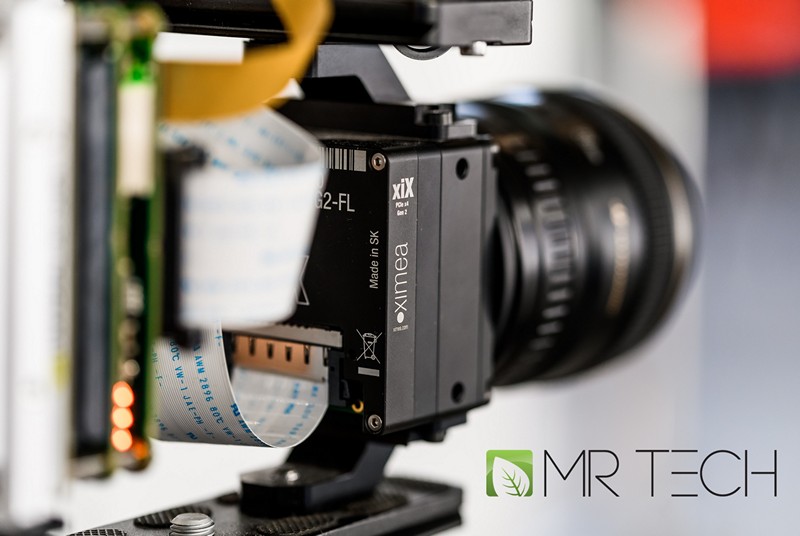
- XIMEA PCIe machine vision camera infrastructure – this is an unique product on the market that allows to connect many cameras into one system, with each camera streaming data at an extremely high bandwidth (up to 64 Gbit/s). Making use of these capabilities enables companies to build really performant high-end solutions with relative ease.
- MRTech IFF SDK – hardware without software cannot deliver any results and IFF SDK is the piece that connects all the other parts together in the most optimal way, guided by the MRTech team’s expertise.
The following is just one example of the results that can be achieved when all three of these building blocks are brought together: 25 ms glass-to-glass latency when simultaneously streaming video from two PCIe cameras with 4K (3840 x 2160) resolution over an Ethernet network.
FINEENG.EU: What estimations do you have for the second half of 2026?
IK: We expect 2026 to be a good year for both the machine vision market and ourselves. We are particularly looking forward to the VISION 2026 exhibition at Messe Stuttgart in October, the main European trade fair for machine vision. Many innovations will be introduced at this event, and MRTech SK will also be exhibiting, so everyone is welcome to visit our stand 8D03 in Stuttgart from 6th to 8th October.